
Application & Digitalization
Trusted and proven multi-user, multi-tasking operating systems trusted for mission critical applications.
Timely Service Delivery & Incident Resolutions!!
The use of digital technologies to change a business model and provide new revenue and value-producing opportunities.
The increasing investment by businesses in digital initiatives are dictated by the customers who expect services and products delivered to be fast and efficient. This basically means the transformational steps for any business engaging technological advancements step by step, starting from paperless processing and up to heavyweight VR and blockchain. In fact, mastering digitalization is about establishing an updated layer for future new tech applications for making a life of the enterprise more streamlined and introduce new quality of customer experience.
Database consolidation is the process of centralizing and sharing of resources for multiple databases and instances. Database consolidation is an important aspect of any server consolidation effort and the reining in of escalating server sprawl.
Benefits of database consolidation include:
- Energy saving as fewer servers require less heating and cooling
- Space saving as fewer servers have a smaller footprint
- Time and money saving through lower IT administrative costs
- Reduced time to manage IT resources which can be used in more effective and useful ways
- Increased availability and higher utilization rates
- Simplified management and greater ease of database administration
- Improved quality of database technology by reducing number of database instances
- Improved backup and disaster recovery through centralization
- Lower licensing costs because fewer instances of the database software are required

Start digitizing your business today
Our digitalization services help service providers to use new technology appropriately and to allocate development resources to targets where they provide the most optimal operational benefit. We help our clients generate permanent benefits in terms of the availability, quality, efficacy and costs of services.
Our expertise lies in the conceptualization and design of technology-aided service production and digital services as well as the definition and the governing in the implementation of information system projects. Understanding digital services’ and their impact is intertwined with our entire strategy and development work.
Enhanced data collection
Most businesses are collecting mountains of data on customers but the real benefit is optimizing this data for analysis that can drive the business forward. Digital transformation creates a system for gathering the right data and incorporating it fully for business intelligence at a higher level.
Data-driven customer insights
Data can be the key to unlocking customer insights. By better understanding your customer and their needs, you can create a business strategy that is even more customer-centric. Using both structured data (personal customer information) and unstructured data, such as social media metrics, these insights can help drive business growth.
Encourages digital culture
By providing team members with the right tools, tailored to their environment, digital transformation encourages a digital culture. While these tools provide an easy way for collaboration, they also help to move the entire organization ahead digitally. This digital culture will be crucial in the future. It forces the upskilling and digital learning of team members to take advantage of the benefits of digital transformation.
Increased profits
Companies that undergo digital transformation improve efficiency and profitability. Consider these results reported by the SAP Center for Business Insights and Oxford Economics:
- 80% of organizations that have completed digital transformation report increased profits.
- 85% say they have increased their market share.
- On average, leaders expect 23% higher revenue growth than competitors.
Increased agility
Digital transformation makes organizations more agile. Borrowing from the world of software development, businesses can increase their agility with digital transformation to improve speed-to-market and adopt Continuous Improvement (CI) strategies. This allows for faster innovation and adaptation while providing a pathway to improvement.
Improved productivity
Having the right tech tools that work together can streamline workflow and improve productivity. By automating many manual tasks and integrating data throughout the organization, it empowers team members to work more efficiently.
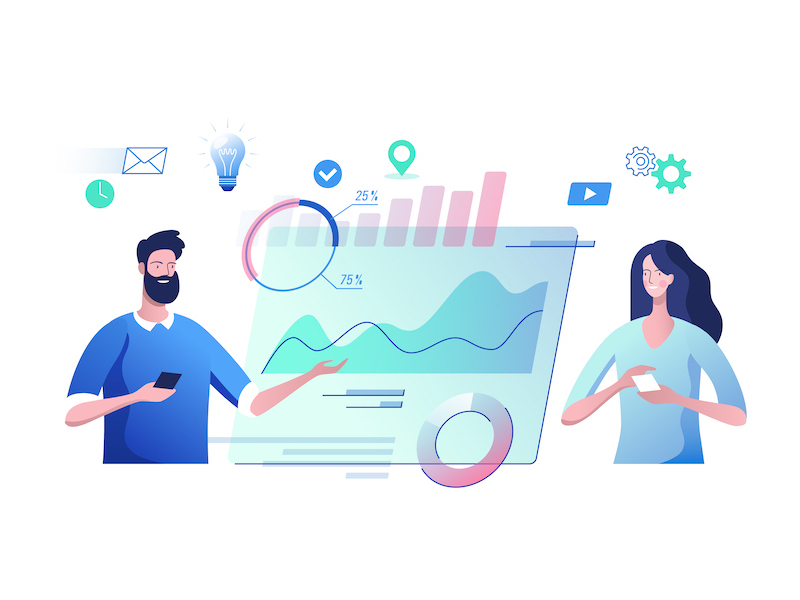
Digital transformation is changing the way an organization operates. Systems, processes, workflow, and culture are all evaluated. This transformation affects each level of an organization and brings together data across areas to work together more effectively.
By taking advantage of workflow automation and advanced processing, such as artificial intelligence (AI) and machine learning (ML), companies can connect the dots on the customer journey in a way that wasn’t possible before.
Application & Digitalization
Frequently asked questions
Digital transformation is the use of technology to make quantum improvements – rather than more incremental adjustments – to an organization. It is more than a simple technology initiative. It is a strategy to completely overhaul an organization’s business model. For example, a company might leverage digital transformation strategies and tactics to overhaul its supply chain or renovate the way customers interact with the company.
Digital transformation can entail any number of technologies, including ERP software, HCM systems, eCommerce,business intelligence, mobile applications, analytics, internet of things along with a host of other possibilities. It should be noted that digital transformation typically entails a flexible and creative use of potential technologies without being contained by any one type of technology. Digital strategies are typically heavily driven by an overarching business strategy rather than by the IT department’s need to upgrade current systems.
Digital transformation is typically a more revolutionary change to a business, whereas ERP software deployments are centered around more incremental business improvements. In addition, digital strategies more commonly leverage innovative new technologies not currently being used by the organization. ERP implementations more commonly involve upgrading an outdated back office system. However, ERP systems can coexist with digital transformations and are often one of multiple components of a comprehensive digital strategy.
Digital transformation is most suitable for organizations that are aggressively pursuing growth, experiencing tectonic shifts in their industries, and/or are interested in overhauling their business models to be more competitive. For example, organizations in the publishing industry are ripe for digital transformation because their product (print publications) are quickly becoming obsolete, technology (the internet and mobile apps) are cannibalizing their legacy products and print-only organizations are struggling to keep up with this evolving competitive landscape. Organizations in this and other industries are leveraging innovative digital strategies to transmute their products, customer experience and supply chains.
Successful digital transformations require a host of strategies and methods. These include strongly defined business process management, a comprehensive organizational change management strategy, firm executive sponsorship and technological creativity and objectivity. Because these types of initiatives entail more risk and change than a more technologically-driven initiative, the people and business process aspects of the change are particularly important. It is important to invest in the right resources and activities to make these projects successful.
A detailed payment plan wil be shared with the you following the quotation of the job. Our advisors will then walk you through the available payment methods whether its local or foreign.
This will highly depend on the extent of your application and it is usually the case for businesses that require guaranteed service up-time.
You can always reach us on our phones, our teams are available around the clock for any questions you may have.
Need Our Help? You Are More Than Welcome To Visit Us Or Give Us A Call
REDEXPER has been helping organizations and Providers through South East Asia manage their IT with our unique approach to technology management and consultancy solutions.
Kuala Lumpur Office
- L21-06, PJX HM Shah Tower, 16 A, Jalan Persiaran Barat, Pjs 52, 46200, Petaling Jaya, Selangor Darul Ehsan, Malaysia
- Phone: +603 7931 6320
- Mobile: +6012 648 2701
- Hours: Mon-Fri: 8am – 7pm
Singapore Office
- 22 Sin Ming Lane, #06-76 Midview City, Singapore 573969,
Singapore - Phone: +6589222041
- Hours: Mon-Fri: 8am – 7pm